Okay, here's that text, rewritten to sound more human.
1. What's a Magnifying Desk Lamp?
It's basically a magnifier (that lens thing) and a light all in one. Instead of messing with a separate magnifier and lamp, this thing lights up and blows up what you're working on. It's great for detailed stuff without all the glare or weird angles.
2. What's It Good For?
* Hobbies and Crafts: Like making jewelry, painting tiny stuff, sewing, working on electronics, soldering circuits, or building models.
* Work Stuff: Fixing watches, dental work, checking things in factories, science projects, salon stuff – anywhere you need to see clearly and have good light.
3. What to Look For
a) How Strong's the Lens?
It's measured in something called diopters (D). Here's the deal:
* 3 D is about 1.75x magnification
* 5 D is around 2.25x
The stronger the magnification, the more detail you see, but your workspace gets smaller – your hands or tools might get in the way.
Two types of lenses:
* Single lens: Simple, weaker magnification, can be a little blurry.
* Double lens: Has two parts so it's sharper and less blurry.
b) The Lighting
Most new lamps use LEDs because they don't suck up as much power, last a long time, and don't get too hot.
Adjustable brightness, and “daylight” colors (4,000–6,500 K) are easier on your eyes. If you need to see colors right, get LEDs with a high CRI (around 90+).
c) How Does It Mount?
* Clamp-on: Saves space and you can move it around.
* Weighted base: Stands on its own, easy to move, and sturdy.
* Screw-in: Super stable, good if you need something really secure or permanent.
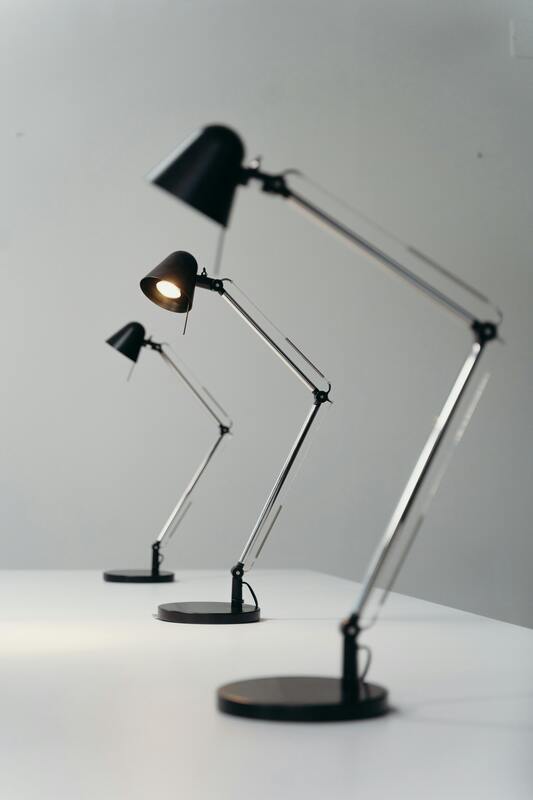
* Arms that bend: You can put it in the perfect spot to see what you're doing.
d) Is it Easy to Use?
Look for things that swivel, arms you can adjust, and settings that remember your preferences, so you don't have to slouch.
It’s cool if it has USB ports for charging your phone.
4. Taking Care of It
Clean the lens with a soft cloth (like for glasses) and maybe a little water or lens cleaner. Don't use rough stuff that could scratch it.
LEDs usually last a long time, but you should check them now and then. It's good if you can replace them.
5. Quick Look at the Good and Bad
| Good | Bad |
| :------------------------------------ | :----------------------------------------------- |
| Clear view with light | Stronger lens = smaller space to work in |
| Frees up your hands | Big lens/arm can take up a lot of desk |
| You can adjust it (clamp/base) | Can cost more than a regular lamp or magnifier |
| LEDs don't use much power | Some might be too big for small desks |
6. What to Look For: The Basics
* Magnification: 1.75x to 2.25x (3 D–5 D) is good for most stuff.
* Lens: Get a double lens for a clear view.
* Lighting: LEDs that you can brighten or dim and change the color; high CRI is a plus.
* Mounting: A clamp is nice for moving it around, a weighted base is good for carrying it.
* Arm/Head: Get something that bends and swivels to you can adjust it easily.
* Extras: USB port, memory settings, cover for the lens to control the light.
7. Some Examples
Here are common styles you can find:
* Clamp-with-arm, 5-inch 5D lens, LED ring – long reach, bright light, USB port.
* Weighted base, mid-size 3–5D lens, dimmable LEDs – good for desks.
* Clamp-mounted lamp, basic 3.5× lens (fluorescent or LED) – cheap and decent for basic work.
1. What's a Magnifying Desk Lamp?
It's basically a magnifier (that lens thing) and a light all in one. Instead of messing with a separate magnifier and lamp, this thing lights up and blows up what you're working on. It's great for detailed stuff without all the glare or weird angles.
2. What's It Good For?
* Hobbies and Crafts: Like making jewelry, painting tiny stuff, sewing, working on electronics, soldering circuits, or building models.
* Work Stuff: Fixing watches, dental work, checking things in factories, science projects, salon stuff – anywhere you need to see clearly and have good light.
3. What to Look For
a) How Strong's the Lens?
It's measured in something called diopters (D). Here's the deal:
* 3 D is about 1.75x magnification
* 5 D is around 2.25x
The stronger the magnification, the more detail you see, but your workspace gets smaller – your hands or tools might get in the way.
Two types of lenses:
* Single lens: Simple, weaker magnification, can be a little blurry.
* Double lens: Has two parts so it's sharper and less blurry.
b) The Lighting
Most new lamps use LEDs because they don't suck up as much power, last a long time, and don't get too hot.
Adjustable brightness, and “daylight” colors (4,000–6,500 K) are easier on your eyes. If you need to see colors right, get LEDs with a high CRI (around 90+).
c) How Does It Mount?
* Clamp-on: Saves space and you can move it around.
* Weighted base: Stands on its own, easy to move, and sturdy.
* Screw-in: Super stable, good if you need something really secure or permanent.
* Arms that bend: You can put it in the perfect spot to see what you're doing.
d) Is it Easy to Use?
Look for things that swivel, arms you can adjust, and settings that remember your preferences, so you don't have to slouch.
It’s cool if it has USB ports for charging your phone.
4. Taking Care of It
Clean the lens with a soft cloth (like for glasses) and maybe a little water or lens cleaner. Don't use rough stuff that could scratch it.
LEDs usually last a long time, but you should check them now and then. It's good if you can replace them.
5. Quick Look at the Good and Bad
| Good | Bad |
| :------------------------------------ | :----------------------------------------------- |
| Clear view with light | Stronger lens = smaller space to work in |
| Frees up your hands | Big lens/arm can take up a lot of desk |
| You can adjust it (clamp/base) | Can cost more than a regular lamp or magnifier |
| LEDs don't use much power | Some might be too big for small desks |
6. What to Look For: The Basics
* Magnification: 1.75x to 2.25x (3 D–5 D) is good for most stuff.
* Lens: Get a double lens for a clear view.
* Lighting: LEDs that you can brighten or dim and change the color; high CRI is a plus.
* Mounting: A clamp is nice for moving it around, a weighted base is good for carrying it.
* Arm/Head: Get something that bends and swivels to you can adjust it easily.
* Extras: USB port, memory settings, cover for the lens to control the light.
7. Some Examples
Here are common styles you can find:
* Clamp-with-arm, 5-inch 5D lens, LED ring – long reach, bright light, USB port.
* Weighted base, mid-size 3–5D lens, dimmable LEDs – good for desks.
* Clamp-mounted lamp, basic 3.5× lens (fluorescent or LED) – cheap and decent for basic work.
Lighting Tips
LEDs are the way to go.
Most new lamps use LEDs. They save energy, last a while, and don't get too hot. Some lights like fluorescent or halogen ones give a wider light, but LEDs are usually better because they're safe and the light is great.
Good Lighting = Better Work
If your light is good, you don't need to zoom in as much to see things clearly. Always check the light when you pick a zoom level.
Mounting and moving the light
Movable Arms
These arms are easy to move around. They're good for times when you just need a closer look every now and then.
Steady Arm with a Stand
If you need both hands free, this is the best choice. Jewelers, watchmakers, and people who work with electronics like these, especially if there are clips to hold stuff.
Separate Light and Magnifier
Some lamps let you move the light and magnifier on their own arms. This means you can get the light just right and cut down on glare.
Things to think about
Working Space
Think about how much room you need under the lens for your hands and tools. If you zoom in more, you get less room. So, pick a zoom level that fits what you're doing.
What You Can See (FOV)
If you have a wider lens and don't zoom in, you can see more at once. This means you don't have to move your work around as much.
Light Color
Being able to change the light color is super helpful. A warmer color (around 3000 K) is easier on the eyes. A cooler color (around 4000 K) is good for seeing small things, like when you're trying to match colors.
How It's Made and How to Keep It Up
Pick lamps made of strong stuff, like metal arms, instead of cheap plastic. Clean the lens often, since dust makes it harder to see. Also, make sure the arm joints move smoothly and the wires are in good shape.
Examples
* For small electronics or soldering: Use a lens that zooms in a lot (5–11 D), LEDs, and a steady arm. Clamps can help keep your hands free.
* For crafts: A medium zoom (3–5 D), arms that move easily, and a light you can change from warm to cool (3k–4k K).
* For general stuff (reading, hobbies): A low zoom (3 D), a big lens, and lots of space to work.
Main points
* Pick how much you want to zoom based on how small the details are and how much space you need.
* Choose lenses that show things sharply.
* Get LED lighting, and if you can, pick lights you can change to avoid hurting your eyes.
* Match the lamp to where you work and how much you need to move it.
* Remember to think about distance, how much you can see, and how to keep it clean so it lasts a long time.
LEDs are the way to go.
Most new lamps use LEDs. They save energy, last a while, and don't get too hot. Some lights like fluorescent or halogen ones give a wider light, but LEDs are usually better because they're safe and the light is great.
Good Lighting = Better Work
If your light is good, you don't need to zoom in as much to see things clearly. Always check the light when you pick a zoom level.
Mounting and moving the light
Movable Arms
These arms are easy to move around. They're good for times when you just need a closer look every now and then.
Steady Arm with a Stand
If you need both hands free, this is the best choice. Jewelers, watchmakers, and people who work with electronics like these, especially if there are clips to hold stuff.
Separate Light and Magnifier
Some lamps let you move the light and magnifier on their own arms. This means you can get the light just right and cut down on glare.
Things to think about
Working Space
Think about how much room you need under the lens for your hands and tools. If you zoom in more, you get less room. So, pick a zoom level that fits what you're doing.
What You Can See (FOV)
If you have a wider lens and don't zoom in, you can see more at once. This means you don't have to move your work around as much.
Light Color
Being able to change the light color is super helpful. A warmer color (around 3000 K) is easier on the eyes. A cooler color (around 4000 K) is good for seeing small things, like when you're trying to match colors.
How It's Made and How to Keep It Up
Pick lamps made of strong stuff, like metal arms, instead of cheap plastic. Clean the lens often, since dust makes it harder to see. Also, make sure the arm joints move smoothly and the wires are in good shape.
Examples
* For small electronics or soldering: Use a lens that zooms in a lot (5–11 D), LEDs, and a steady arm. Clamps can help keep your hands free.
* For crafts: A medium zoom (3–5 D), arms that move easily, and a light you can change from warm to cool (3k–4k K).
* For general stuff (reading, hobbies): A low zoom (3 D), a big lens, and lots of space to work.
Main points
* Pick how much you want to zoom based on how small the details are and how much space you need.
* Choose lenses that show things sharply.
* Get LED lighting, and if you can, pick lights you can change to avoid hurting your eyes.
* Match the lamp to where you work and how much you need to move it.
* Remember to think about distance, how much you can see, and how to keep it clean so it lasts a long time.